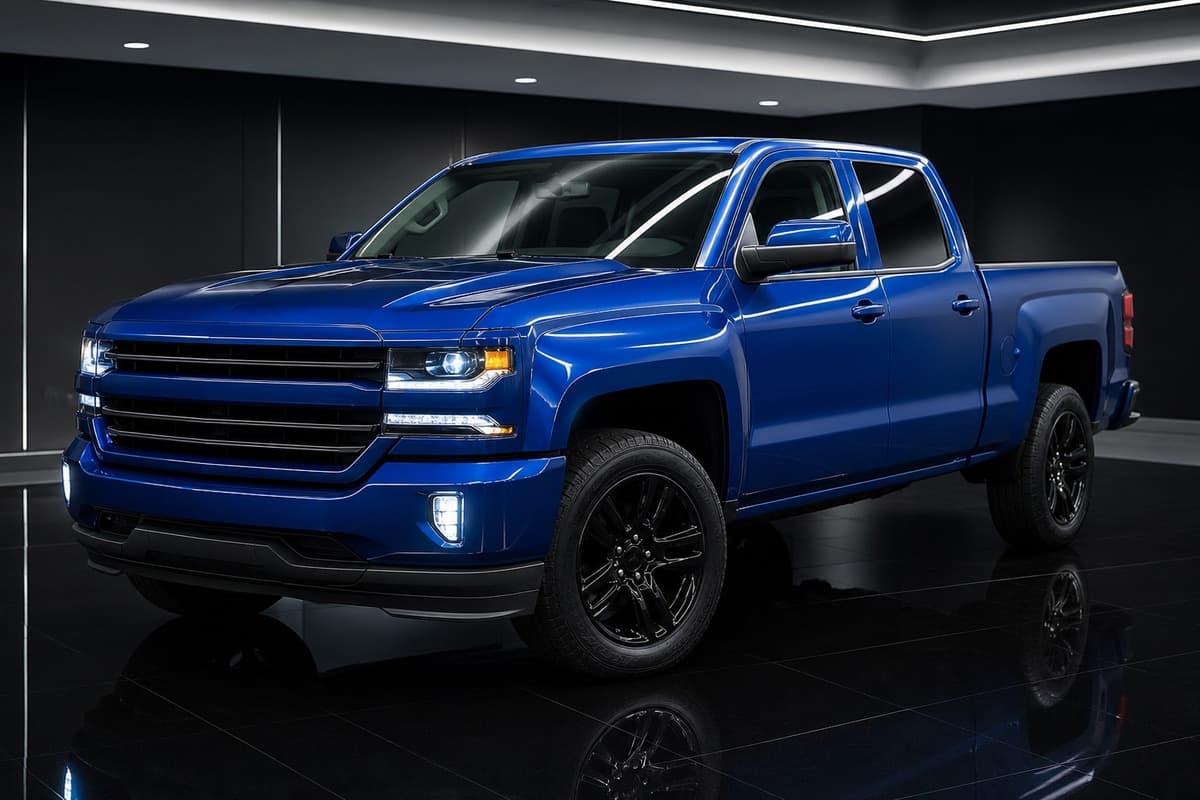
The 2004 Ford F-150 launched the eleventh generation of America's best-selling truck — and it came with a lot of promise. A fresh body style, updated powertrains, and a more refined interior made it one of the most anticipated F-150s in years. But that first model year of any generation often carries growing pains, and the 2004 F-150 is no exception. Owners quickly discovered a set of recurring mechanical issues that have followed this truck for decades.
If you're driving a 2004 F-150 — or shopping for one — it pays to know exactly what you're dealing with. The 4R70W/4R75E 4-speed automatic transmission and the 5.4L Triton 3V V8 engine are both capable units, but each has specific failure patterns that show up with maddening regularity. The good news is that these problems are well-understood, and replacement parts are available to get you back on the road.
At expediaparts.com, we've helped thousands of F-150 owners work through exactly these situations. Whether you're chasing a transmission that's slipping out of overdrive or dealing with the infamous 5.4L spark plug nightmare, this guide walks you through what's happening, what it costs, and what your smartest move is.
What the Research Shows
The 2004 Ford F-150 ranks #9 on our list of vehicles with the most common powertrain replacement needs — and it earns that spot honestly. As the first year of the 11th-generation platform, it saw more than its share of early-production issues. According to 1A Auto's breakdown of 11th-gen F-150 problems, the transmission and 5.4L engine are the two most frequent failure points owners encounter. Community forums, repair shops, and parts suppliers across the country have documented these same issues at high volume year after year.
The 5.4L 3V engine pairing — used in millions of Ford trucks, SUVs, and vans during this era — has its own well-documented history, extensively covered by Powertrain Products in their Ford 5.4L Triton common problems guide. Both the transmission and the engine have defined failure signatures. Once you know what to look for, diagnosis becomes much more straightforward.
Common Transmission Problems
The 2004 F-150 came equipped with the 4R70W or 4R75E 4-speed automatic transmission — depending on trim and powertrain. This is a solid, long-running Ford unit, but the 2004 model year represents the most problematic version of this transmission in the 11th-gen lineup.
The most common complaint is loss of 4th gear or overdrive. The truck drives normally in lower gears but drops out of overdrive under load or at highway speeds. This often traces back to the torque converter clutch solenoid or the overdrive solenoid — generating fault codes P0740, P0743, or P0748.
One underappreciated culprit: transmission connector corrosion. The electrical connector feeding the solenoid pack is exposed to road debris and moisture. When it corrodes, it triggers multiple solenoid fault codes simultaneously — codes that look like internal transmission failure but are actually a wiring issue. Always inspect the connector before condemning the transmission. Additional real-world troubleshooting is shown in this 2004 Ford F-150 transmission video.
If the solenoid or connector isn't the root cause, the valve body or internal clutch packs are likely worn — especially on high-mileage trucks. At that point, a remanufactured unit is often the most cost-effective path forward.
Looking for a 4R75E? Shop remanufactured and used transmissions at expediaparts.com and get back on the road with confidence.
Common Engine Problems
The 5.4L Triton 3V V8 is a powerful engine — when it's healthy. But this generation of the 5.4L introduced a two-piece spark plug design that became one of the most expensive and frustrating maintenance headaches in modern truck history.
Spark plug blowout and seizure is the defining failure of the 5.4L 3V. The two-piece plugs have a tendency to seize in the aluminum cylinder heads. Attempts to remove them — especially after 80,000–100,000 miles without service — frequently result in the plug breaking off and stranding the outer shell in the head. Repair can require head removal or specialized extraction tools, and shop labor costs can exceed the value of the engine itself. Powertrain Products documents this issue in detail as one of the most common reasons for 5.4L engine replacement.
Cam phaser failure is the second major concern. A rattling noise from the front of the valve cover area — especially on cold starts — is a classic cam phaser symptom. Left unaddressed, it leads to timing chain problems.
Timing chain stretch and broken tensioners follow phaser failure on neglected engines. The chain guides and tensioners on the 5.4L are not particularly robust, and once the chain is stretched, you'll notice rough running, timing codes, and eventually more serious internal damage.
Oil sludge buildup accelerates all of the above. The 5.4L rewards consistent oil changes and punishes neglect. Many of the engines that come in for replacement have sludge coating the oil passages, starving the cam phasers and timing components of the lubrication they need.
Finally, ignition coil boot deterioration is common on older examples. Cracked or burned boots cause misfires that are easy to misdiagnose as internal engine problems. Always inspect the coil boots before assuming the worst.
Need a replacement 5.4L engine? Expediaparts.com carries used and remanufactured options with fitment verified for the 2004 F-150.
Recall Note
There are no open safety recalls specific to the 2004 F-150's spark plug issue, but
Ford issued multiple Technical Service Bulletins (TSBs) addressing the two-piece spark plug design on the 5.4L 3V. These TSBs outlined revised removal procedures and updated plug specifications. Always verify current recall and TSB status for your specific VIN at NHTSA.gov before purchasing a used unit or beginning major repairs.
Other Common Failures
Beyond the transmission and engine, 2004 F-150 owners frequently report:
• Oil pan gasket leaks — A common slow leak on higher-mileage trucks. Usually a manageable repair but worth addressing before it leads to oil starvation.
• Exhaust manifold leaks — The cast-iron manifolds develop cracks and warps over time, especially with the heat cycles of the 5.4L. A ticking or hissing noise on startup is the giveaway.
• Oil pump failure — Rare on well-maintained engines, but a real risk on neglected trucks with sludge buildup. If the oil pump goes, the engine goes with it.
Used vs. Remanufactured
Both options have a place, depending on your situation.
Used (salvage) units are lower cost and work well when you can verify mileage and service history. For the 4R75E transmission, a used unit from a lower-mileage donor truck can be a smart buy. For the 5.4L engine, the risk is higher — you may be buying someone else's spark plug problem or cam phaser damage without knowing it.
Remanufactured units are rebuilt to OEM spec, typically with updated components that address known failure points. For the 5.4L 3V specifically, a remanufactured engine is often the smarter long-term investment — the known weak points have usually been addressed during the rebuild process. Remanufactured transmissions come with fresh solenoids and clutch packs, eliminating the guesswork of a used unit.
At expediaparts.com, we carry both options and can help you choose the right fit for your mileage, budget, and how long you plan to keep the truck.
Price Range
Here's what to expect for the part itself on a 2004
Ford F-150 (price varies with mileage, condition, core charge, and shipping):
- Used transmission: $500–$1,100
- Remanufactured transmission: $1,400–$2,600
- Used engine: $600–$1,400
- Remanufactured engine: $2,000–$3,800
Prices vary based on mileage, condition, and supplier. Installation labor is additional and will depend on your location and shop rates.
Our Warranty
Every used and remanufactured unit sold through expediaparts.com comes with a warranty. Coverage terms vary by part type — contact us directly for the specifics on the unit you're considering. We stand behind what we sell because we want to get you back on the road and keep you there.
Is Replacement the Right Move?
For the 5.4L 3V engine: if your truck has high mileage and you're facing the spark plug blowout scenario, replacement is almost always the right call. The cost of extracting broken plugs, inspecting the head, and addressing the cam phasers and timing chain can easily surpass the cost of a quality replacement engine — especially on a truck you plan to keep.
For the 4R75E transmission: start by ruling out the connector and solenoid before assuming the worst. If the transmission itself is worn — sustained OD slip, harsh shifts, or P-code clusters that don't resolve with solenoid replacement — a remanufactured unit is a solid investment if the rest of the truck is in good shape. The F-150 platform is robust and worth saving.
Ready to Get Back on the Road?
Don't let a transmission or engine problem sideline one of the toughest trucks on the road. At expediaparts.com, we're here to help you find the right replacement unit at the right price — used or remanufactured, with warranty coverage you can count on.
Shop 2004 Ford F-150 transmissions and engines at expediaparts.com — and let us help you get back on the road.
Frequently Asked Questions
How much does it cost to replace the 2004 Ford F-150 engine or transmission?
At expediaparts.com, used transmissions typically run $500–$1,100, remanufactured transmissions $1,400–$2,600, used engines $600–$1,400, remanufactured engines $2,000–$3,800 for the 2004 Ford F-150. Final pricing depends on mileage, core charge, and shipping.
Should I buy a used or remanufactured engine or transmission for my 2004 Ford F-150?
A used unit is the lower-cost option and makes sense when the rest of your Ford F-150 is in good shape. A remanufactured unit is rebuilt to spec with stronger warranty coverage and is the smarter long-term choice if you plan to keep the vehicle for years. Both are available at expediaparts.com.
Does expediaparts.com warranty Ford F-150 engines and transmissions?
Yes. We back both used and remanufactured engines and transmissions with warranty coverage, and our drivetrain specialists confirm VIN fitment before you buy. We want to get you back on the road.
Related on Expedia Parts
- Warranty policy and Expedia Protection: /warranty
- Documents required for a warranty claim: /blog/documents-required-warranty-claim
- Check engine light after engine swap: /blog/check-engine-light-after-engine-swap
- Transmission slip and shudder after replacement: /blog/transmission-slip-and-shudder-after-replacement
- Torque converter shudder vs bad transmission: /blog/torque-converter-shudder-vs-bad-transmission
- Engine misfire after replacement: /blog/engine-misfire-after-replacement